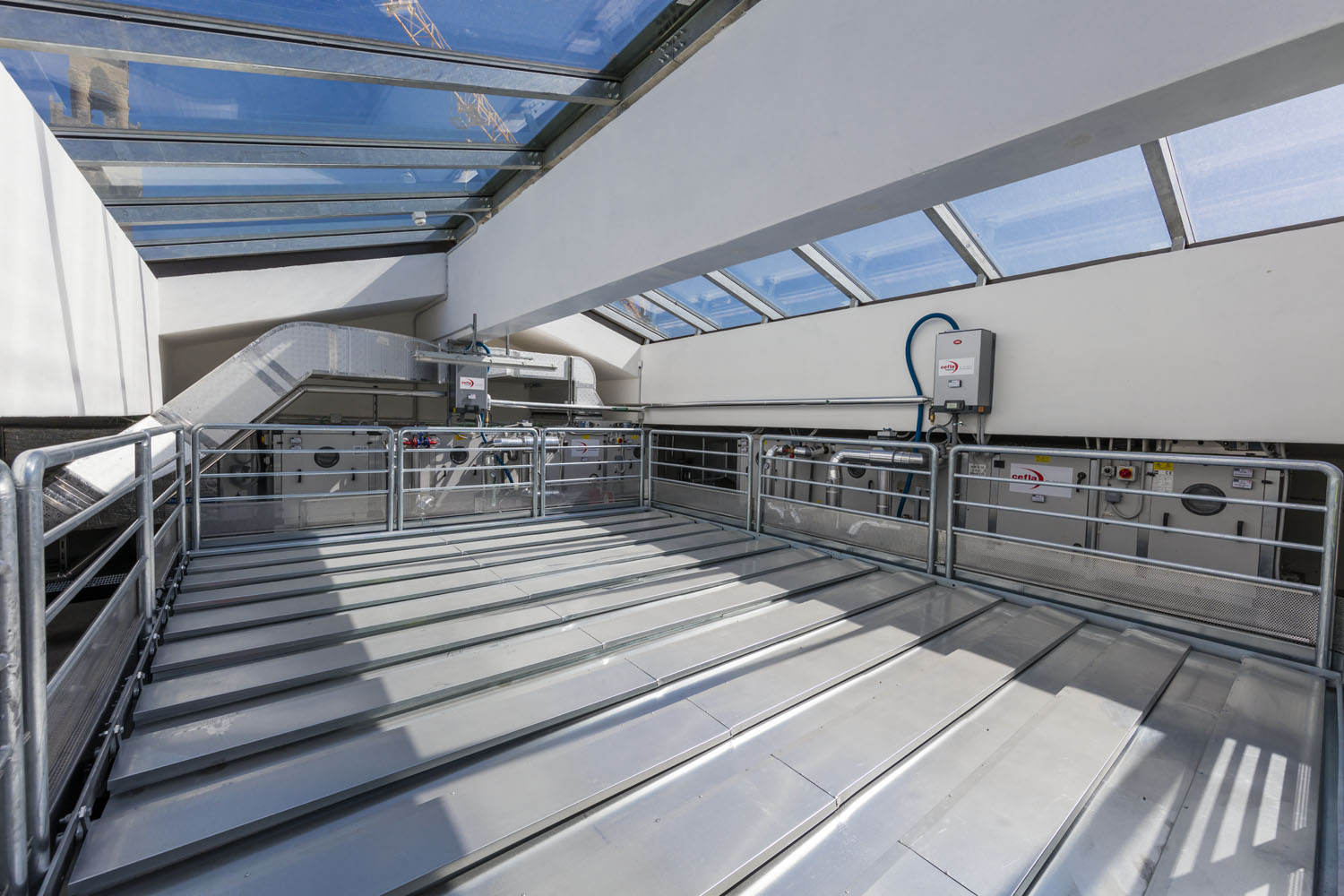


The growing focus on reducing energy consumption, decarbonization and infrastructure efficiency is profoundly transforming the way companies and organizations design and manage their facilities.
Today, energy sustainability can no longer be viewed as an isolated initiative or one limited to the introduction of individual technologies. Making infrastructure truly sustainable means designing integrated systems capable of optimizing energy production, distribution and use throughout the facility’s lifecycle.
In this context, the role of engineering becomes central: multidisciplinary expertise is needed to combine plant design, energy management, digitalization and technological innovation.
Cefla’s Engineering Business Unit operates precisely in this direction, as highlighted in the latest Sustainability Report just published by the Cefla Group, supporting companies and organizations in the development and management of complex infrastructure through an approach that integrates energy efficiency, new technologies and smart asset management.
Energy Sustainability as a New Challenge for Complex Infrastructure and Facilities
Today, technological systems are one of the key elements for achieving efficiency goals and reducing environmental impact.
Industrial buildings, critical infrastructure, healthcare facilities, data centers and energy grids require systems that are increasingly high-performing, reliable and capable of adapting to constantly evolving needs.
The main challenges include:
- reducing energy consumption;
- optimizing available resources;
- reducing emissions associated with production processes;
- improving infrastructure resilience;
- continuous performance monitoring.
The key shift is from a traditional model—based on the separate management of individual plants—to an integrated approach in which energy, data and technologies interact with one another.
A sustainable facility is therefore not simply one that consumes less energy, but a system designed to operate more efficiently, be monitored over time and adapt to operational needs.
An Integrated Approach: From Facility Design to Energy Management
Energy sustainability requires a comprehensive vision that encompasses all phases of the infrastructure’s life cycle: from initial design through to day-to-day management.
For this reason, an engineering partner must be able to integrate different areas of expertise:
- design and construction of technical systems;
- energy management of assets;
- maintenance and performance optimization;
- development of digital monitoring solutions;
- integration of technologies for advanced energy production.
Cefla’s Engineering Business Unit operates across several specialized areas, including:
- EPC Contracting;
- Facility Management;
- Power Generation;
- Networks and Utilities.
This model allows us to approach sustainability not as a separate project, but as a continuous process that accompanies the design, construction, use and improvement of infrastructure.
EPC Contracting: Designing Efficient Infrastructure from the Start
The choices made during the design phase largely determine a facility’s future performance.
Through EPC Contracting, it is possible to develop complex infrastructure by integrating various technical disciplines and defining solutions focused on energy efficiency, safety and durability.
Effective design, in fact, allows us to:
- optimize the sizing of systems;
- integrate complementary energy systems;
- reduce operational inefficiencies;
- establish simpler and more advanced management methods.
The EPC approach also allows for the coordination of the various project phases, from design to construction, ensuring greater control over the overall performance of the project.
Throughout its history, Cefla Engineering has participated in the construction of infrastructure characterized by high technological complexity, including projects such as La Scala, EXPO 2015 and the Allianz Tower.
Facility Management: Maintaining Building Performance Over Time
The sustainability of a facility does not end with its construction.
An efficient infrastructure must maintain its performance over time through management, monitoring and ongoing maintenance.
Facility Management therefore plays a strategic role because it allows for:
- monitoring the operation of systems;
- analyzing energy consumption;
- identifying opportunities for improvement;
- preventing inefficiencies and malfunctions;
- ensuring operational continuity.
Smart asset management thus becomes a fundamental tool for transforming existing facilities into more efficient and sustainable infrastructure.
Technologies for the Energy Transition: Efficient Production and Emissions Reduction
The energy transition requires a shift in how energy is produced, used and managed.
Companies are called upon to integrate solutions capable of increasing the overall efficiency of energy systems by combining different technologies and supply sources.
Among the most significant elements are:
- high-efficiency generation systems;
- integration of different energy sources;
- solutions for distributed generation;
- technologies aimed at reducing emissions.
Fuel Cells and Hydrogen: New Prospects for Power Generation
Fuel cell technologies are one of the most promising solutions on the path toward more sustainable energy systems.
Unlike traditional combustion-based systems, fuel cells produce energy through an electrochemical process, enabling more efficient electricity generation.
Within the scope of energy transition, hydrogen plays a strategic role, particularly related to the potential use of fuels with a lower environmental impact.
The Hydrogen-Ready Fuel Cells, developed by Bloom Energy, are designed to operate with hydrogen blends or green hydrogen, and are part of the NOVA Solution by Cefla lineup—the solution implemented by Cefla that produces electricity and heat without combustion and without emissions of NOx, SOx or particulate matter.
These technologies exemplify how innovation can contribute to the development of more flexible energy systems geared toward decarbonization.
Energy Hubs and Biomethane: Integrated Systems for Energy Independence
The future of energy management increasingly relies on integrated systems capable of combining different technologies within a single architecture.
Energy Hubs enable the coordination of:
- cogeneration;
- photovoltaic power generation;
- heating systems;
- renewable energy sources;
- energy self-sufficiency solutions.
NOVAbio Solution by Cefla, a line dedicated to direct feed-in of biomethane and biogas, also fits into this scenario.
The goal is to develop systems capable of making the best use of available resources, improving energy efficiency and flexibility.
Plant Digitalization: The Role of Data in Sustainability
The sustainability of plants also depends on the ability to collect, interpret and correctly use data.
In fact, digitalization makes it possible to turn traditional facilities into smart systems, where every parameter can be monitored and analyzed.
Through sensors, digital platforms and analytical tools, it is possible to:
- monitor energy consumption;
- identify operational anomalies;
- improve maintenance;
- predict potential failures;
- optimize overall performance.
Data thus becomes a strategic resource for making more informed decisions and reducing waste.
Smart Water Management and Artificial Intelligence to Reduce Waste
Sustainable infrastructure management concerns not only energy but also natural resources.
Smart water network management is a concrete example of how technology and sustainability can be integrated.
Through advanced monitoring systems, it is possible to:
- analyze consumption;
- identify leaks;
- detect abnormal behavior;
- improve network management.
Cefla Engineering develops solutions based on sensors and digital tools that also leverage artificial intelligence technologies to support the predictive identification of anomalies in water infrastructure.
En.Vision and IoT: Predictive Maintenance and Infrastructure Monitoring
Advanced plant management requires platforms capable of integrating data from different sources.
The En.Vision platform was created with the goal of supporting the monitoring and optimization of infrastructure through:
- integration of IoT sensors;
- data analysis;
- process automation;
- predictive maintenance.
This approach enables a shift from primarily reactive maintenance to preventive management, thereby increasing reliability and operational continuity.
Sustainability also means quality, safety and responsibility
Energy sustainability is not limited to environmental considerations alone.
A truly sustainable model must also incorporate aspects related to process quality, personal safety and accountability throughout the entire supply chain.
For this reason, integrated management systems capable of coordinating the following are essential:
- environmental protection;
- health and safety;
- process quality;
- social responsibility.
Cefla Engineering operates in accordance with recognized standards through certifications that include:
- ISO 14001 for environmental management;
- ISO 45001 for occupational health and safety;
- ISO 50001 for energy management;
- SA 8000 for social responsibility;
- ISO 14064-1 for carbon footprint;
- ISO 37001 for anti-bribery management.
These tools provide practical support for establishing more controlled and responsible processes.
The Future of Sustainable Engineering: Integrating Technology, Energy and Expertise
The energy transition requires a cultural shift even more than a technological one.
The infrastructure of the future must be more efficient, digitalized and capable of adapting quickly to new energy needs.
To achieve these goals, it will be essential to integrate:
- multidisciplinary engineering expertise;
- advanced energy technologies;
- digital tools;
- management capabilities throughout the plant’s lifecycle.
Innovation arises from the intersection of technology and people.
Skills development is also a strategic element: programs dedicated to training the next generation, such as the Talent Hub project, contribute to building the professional expertise needed to tackle future challenges.
Conclusion: Designing more sustainable infrastructure today means building value over time
The energy sustainability of facilities is not merely a technological choice, but a process that involves design, energy, management and innovation.
Reducing consumption and emissions requires integrated systems capable of combining engineering expertise, digitalization and advanced energy solutions.
For companies, public agencies and organizations seeking to improve the efficiency and resilience of their infrastructure, value stems from the ability to adopt a comprehensive vision: designing better, managing intelligently and using technology as a lever for continuous improvement.
Through a multidisciplinary approach, Cefla Engineering supports the development of infrastructure that is more efficient, reliable and ready to meet the challenges of the energy transition.
Published on September 04, 2026