

From 2026, air emission limits will apply to both existing and new biogas plants in Italy, and this will lead to operators running endothermic engines having to make a choice: replace the engine, invest in abatement systems that add costs without any return in terms of revenue, or reduce the size of the engine to fall within the parameters of Sustainability under the August 7, 2024, DM. Many operators are beginning to understand the impending impact to their business model.
Cefla Engineering already has the answer: NOVAbio Solution by Cefla, a cogeneration system based on SOFC (Solid Oxide Fuel Cell) technology developed by Bloom Energy, integrated with the biogas treatment system and heat recovery system developed by Cefla Engineering.
How does it work?
First, NOVAbio Solution by Cefla does not burn the biogas, but converts it electrochemically. As a result, SOx, NOx and CO are absent or negligible. No combustion, no harmful emissions no emission abatement system or continuous monitoring. Just a significant competitive advantage for a large number of potential users. In fact, standard biogas engines achieve electrical efficiencies of 35-42% (depending on size, at test and not guaranteed). Fuel Cell cogeneration guarantees 52% electrical efficiency, contractually defined, for the entire contract term, typically 10 or 15 years. Power availability is guaranteed at 95 percent of rated capacity: on a 1 MW installed capacity plant, this means a minimum of 950 kW, continuously, for the duration of the contract.
The benefits are manifold
NOVAbio Solution by Cefla needs about 30 percent less biomass input to produce the same electricity as an engine. For a 1 MW corn-fired plant, this equates to about 34 hectares per year no longer needed for energy crop production. Less biomass input also means less digestate output, up to 35 percent less. For agricultural operators managing nitrogen spreading limits, this represents a significant operational benefit.
Simple to install, zero maintenance for the operator
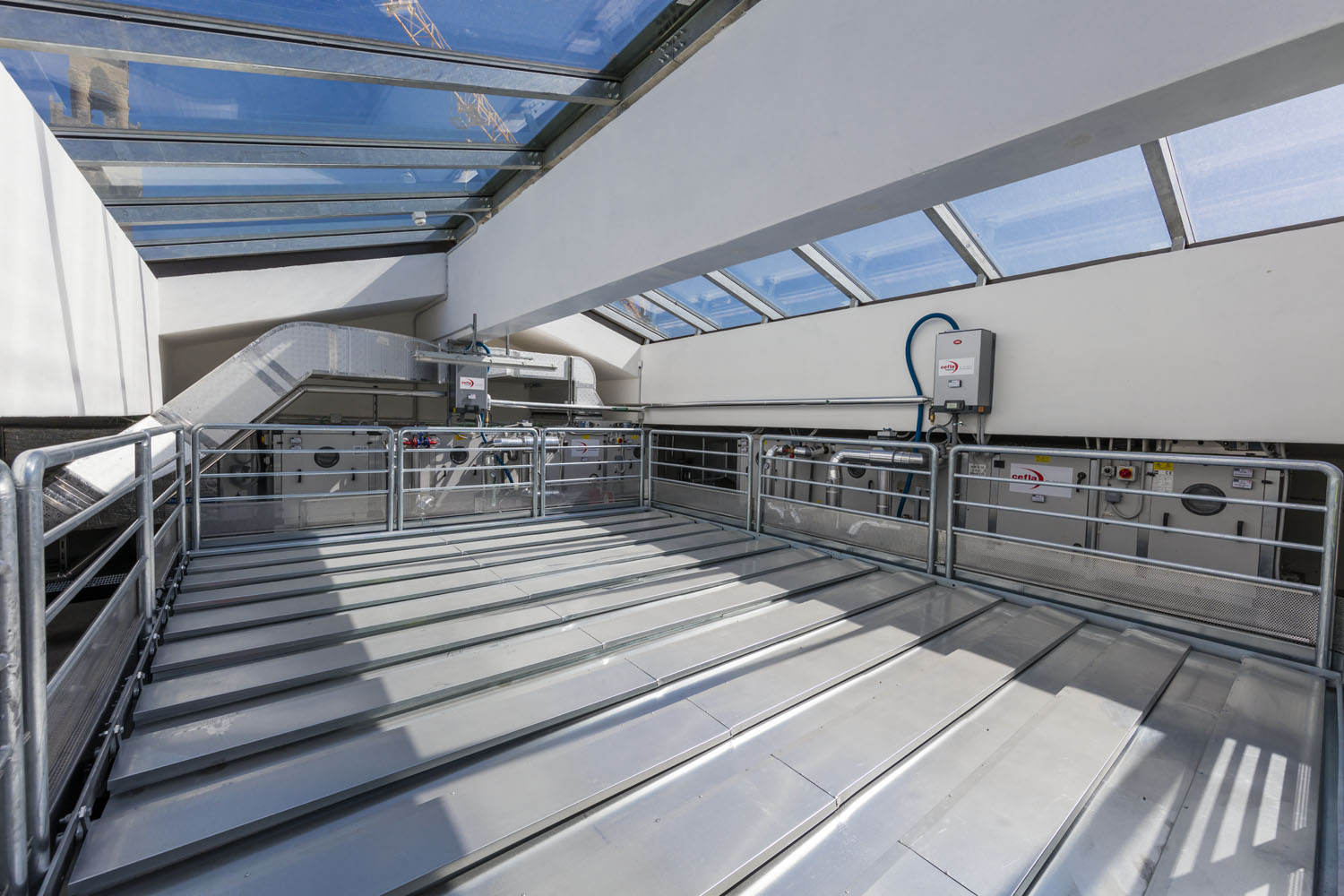
The entire system is delivered in pre-assembled form on a skid. Fuel Cell modules are configured at our facility and arrive ready for connection. Commissioning typically takes one to two weeks. The footprint of a 1 MW system is about 140 m², comparable to an existing engine plant with associated emission abatement systems.
Day-to-day operation requires no intervention by the plant operator. The majority of operations are monitored and performed remotely, and Cefla Engineering manages the rest directly on site.
The issue of incentives
NOVAbio Solution by Cefla is a qualified system to access the non-refundable subsidies provided for in the Ministerial Decree Ecological Practices.
On carbon credits, the current PMG framework does not allow for monetization ofCO2savings. This would be an issue to focus on because theCO2 reduction per kWh achieved is up to 30% compared to motor-driven generation. A premium per MWh input that reflected this, or eligibility for carbon credits, would be the policy change that really accelerates the technology.
The installed portfolio already covers five areas, from 325 kW biomethane systems to 1 MW agricultural plants and 750 kW industrial installations. One of these 520 kW systems is already in operation at a customer in the Automotive sector, powered by direct biomethane from a plant that recovers industrial waste. NOVAbio Solution by Cefla is ready now and ready for the future.
Published on May 05, 2026