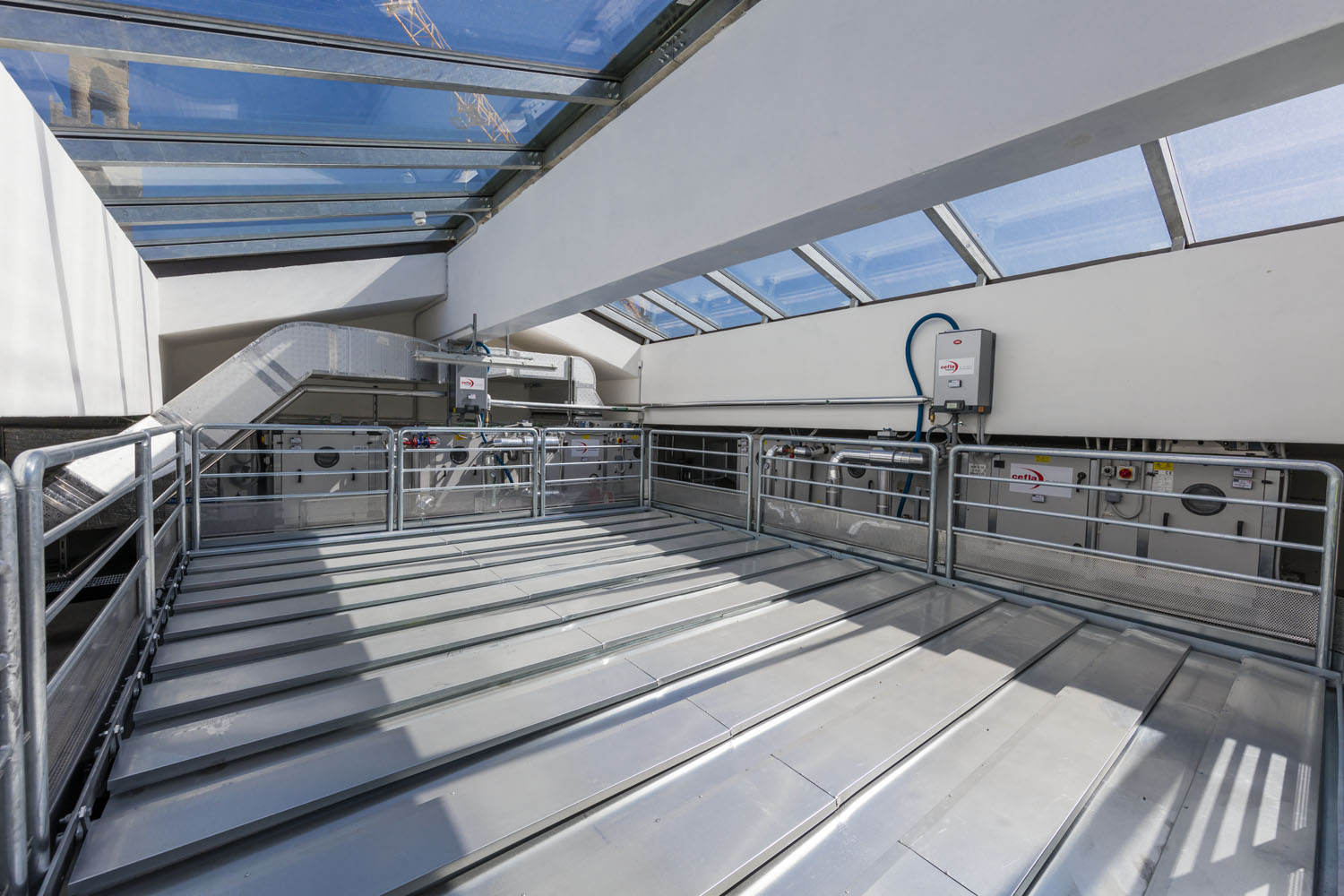

Cabina AT Astalli

Rete elettrica
Customer ARETI - Gruppo ACEA
Where Roma
Solution Reti e Utilities
Sector Rete elettrica

Cefla has completed a major fire safety upgrade at the "Astalli" transformer substation, located in Rome's historic center. The significant technical and structural challenges were overcome without any interruption to electrical service.

Strengths

Cefla has made all its experience and expertise available in the work on high-voltage cabins and in the creation of fire protection systems.

The numerous operational, technological, and security complexities were addressed with ad hoc solutions, following a problem-solving approach.

The Cefla team handled all the construction and plant engineering work, including scaffolding and temporary structures extending from the third basement level to the roof of the building.


Key Numbers

Duration of the intervention

58

weeks
Underground depth of the intervention

3 floors

below street level

Background

Located just steps from Piazza Venezia, in the Campidoglio district, the Astalli primary electrical substation is among the oldest and most important in Rome. Since 1930, it has occupied part of the basement of Palazzo Astalli, a 16th-century noble residence, and in 1997 it was expanded below street level.

The substation is composed of three main sections: the delivery point receives high-voltage electricity from the main grid; two transformers act as backups for each other, reducing the voltage from high to medium; and the MV switchboard distributes electricity to the secondary substations.

These, in turn, feed the low-voltage lines, intended for connected users, including homes, offices, commercial spaces, institutional buildings, and monuments.

The single existing compartment has been divided into several rooms, all protected by fireproof REI 120 walls and doors made of calcium silicate panels, which ensure mechanical resistance, sealing, and thermal insulation. To address emergency conditions, the cabin is equipped with mechanical ventilation systems for hygienic renewal and forced air extraction.


Challenges

Palazzo Astalli is a prestigious historic building, and no structural interventions or alterations to its façades are permitted.

  • The work involved the narrow cabin spaces, located on the three underground levels of the building and below the street, and the internal cloister, protected by a new roof.

  • Every construction and system component was custom-built to comply with architectural constraints and the specific operational and environmental conditions.

  • The smoke and heat exhaust duct passes through the narrow cloister to reach the roof of the building, approximately 40 meters above ground.


Project Tasks

Cefla has been working with Areti since 2014, supporting the management, maintenance, and implementation of medium- and low-voltage electrical networks, including extraordinary maintenance of primary and secondary substations. The goal is to offer an increasingly comprehensive service within the timeframes required by Areti and its users.

The fire safety upgrade of the Astalli substation was conducted in compliance with current technical standards, following a detailed project focused on both risk prevention and the installation of state-of-the-art fire detection and extinguishing systems, despite significant constraints.

The single existing compartment was divided into several rooms, all protected by fireproof walls and doors (REI 120) made of calcium silicate panels, which ensure mechanical resistance, watertightness, and thermal insulation. To address emergency conditions, the substation is equipped with mechanical ventilation systems for hygienic renewal and forced air extraction.


Implementation

The systems have been completely technologically upgraded, using solutions compliant with technical and safety regulations.

The cabin's completely underground location, three levels below street level, and the cramped interior spaces, located between the building's foundations and below the street, made all operations particularly complex, particularly the transportation and installation of the new components.

The new fire detection network includes linear barriers, sensors, and state-of-the-art control units, connected to the Implementation control system. If necessary, the inert gas extinguishing system extinguishes the fire in seconds, reducing the oxygen concentration in the air without leaving residues. The new ventilation system's ducts run vertically through the narrow internal courtyard of the building, reaching the roof to ensure effective smoke and heat dissipation. The courtyard is protected by a new transparent roof.

The work lasted just over a year in total, during which the substation continuously supplied electricity to all connected users, without interruptions or disruptions.


Find the perfect solution for your business

4a2b25ccbf8b2e6563b6b139f2199771f55eed72
We create. You live