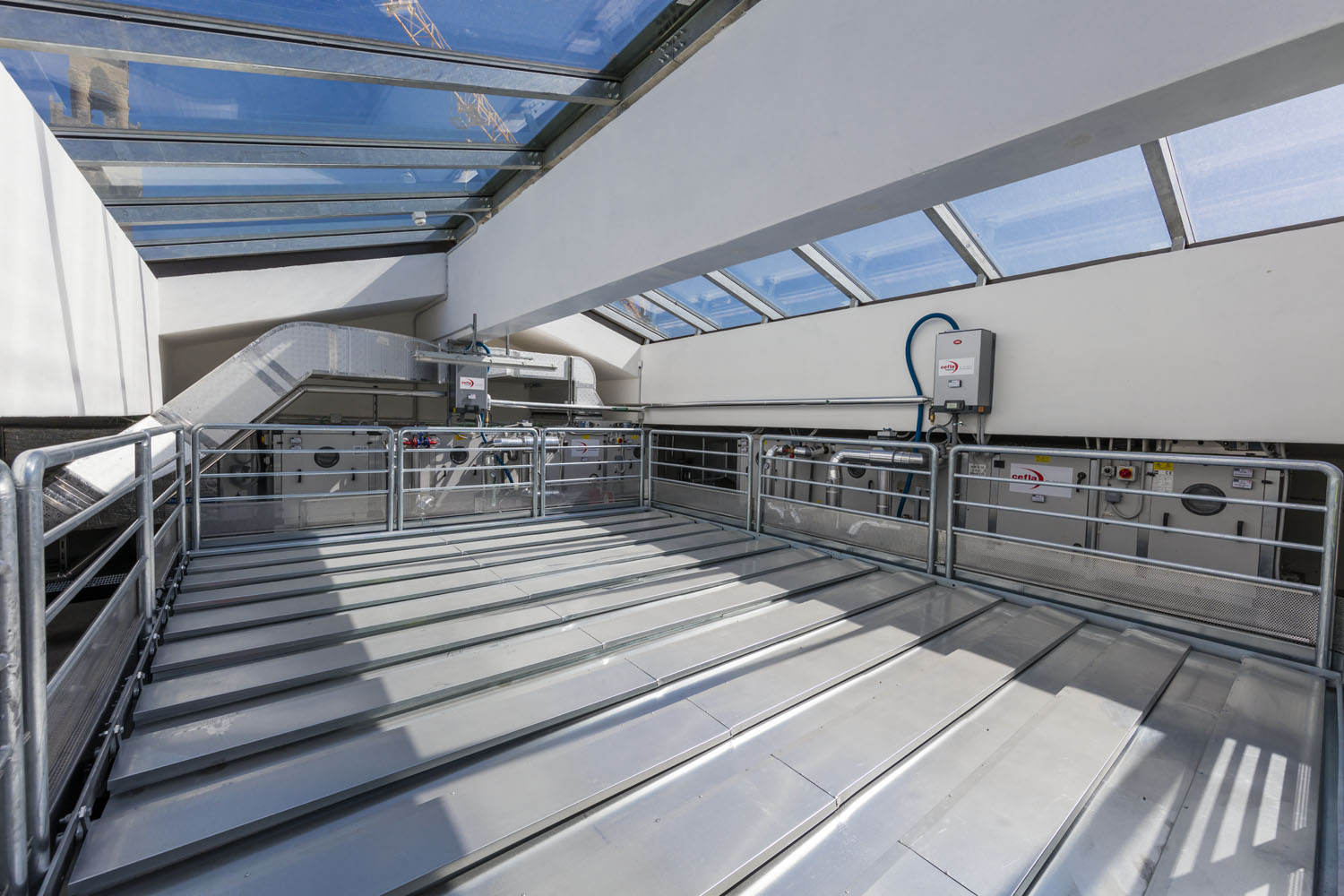


The moment a system is commissioned is usually seen as the final milestone. For Cefla Engineering, however, it marks the beginning of a more significant challenge that involves several key aspects: ensuring operational continuity, efficiency, and profitability by establishing long-term partnerships. This approach knows no limits in terms of scale, because Cefla’s operational flexibility allows it to handle a wide range of sizes, from small-scale systems to complex industrial plants.
Maintenance begins before startup.
Contrary to the traditional view, effective management of an energy asset begins as early as the design phase. The #ServiceEnergia team adopts atailor- , analyzing energy sources and individual components before the plant goes into operation. The goal is to develop a customized maintenance plan capable of covering up to 80,000 hours of the machine’s service life, through a collaborative, iterative process with the customer.
Anticipating and preventing emergencies.
A model based on reactive intervention leads to production losses and increased operating costs. The leap in quality comes with predictive maintenance, which allows problems to be anticipated before they become critical. The effectiveness of this method is demonstrated by concrete, measurable results, including a 30% reduction in unplanned downtime, a 15% increase in overall energy efficiency, and a 25% decrease in extraordinary costs.
This evolution is driven by the integration of advanced digital tools such as SCADA, which enables real-time remote monitoring and the detection of faint signals imperceptible to the human eye or ear, and CMMS, which provides precise scheduling of maintenance tasks and historical data archiving. Strategic decisions on when and how to intervene are made based on this combination of information. Thanks to this approach, maintenance ceases to be an unavoidable cost and becomes a source of profit, minimizing downtime.
An integrated system of expertise.
Operational continuity is ensured by an organization where every role is essential: from the Service Manager, responsible for strategic coordination and customer relations, to the Field Technician, who serves as the bridge between the engineering department and the field, to the Coordinator and Field Technicians, professionals who ensure operational excellence. To this wealth of proven experience—with technicians boasting up to 40 years of know-how—Cefla Engineering is adding younger professionals with strong digital skills to integrate practical expertise with new data analysis capabilities.
Case Studies: When Challenges Become Opportunities.
The effectiveness of Cefla Engineering’s approach is clearly evident in concrete projects across complex industrial sectors. A client in the pharmaceutical sector, for example, faced a critical issue regarding steam consumption linked to an evaporator, which was resolved by installing a cryogenic evaporator and recovering heat from the low-temperature circuit, resulting in an increase in the plant’s overall efficiency of over 80%. A client in the food industry, on the other hand, was dealing with an issue related to a natural gas line running through a high-risk area. The removal of the natural gas line was made possible by tapping into the low-temperature circuit, which allowed for the recovery of waste heat through the installation of a water/air heat exchanger. This made it possible to decommission the boiler fueled by the natural gas line that ran through the high-risk area.
An evolving partnership for every plant.
This model is not limited to new projects but also applies to existing systems, offering assessments of the current state, renovation of system components, and continuous optimization. The ultimate goal is not simply to keep a system running, but to build a lasting partnership capable of generating value throughout its entire lifecycle.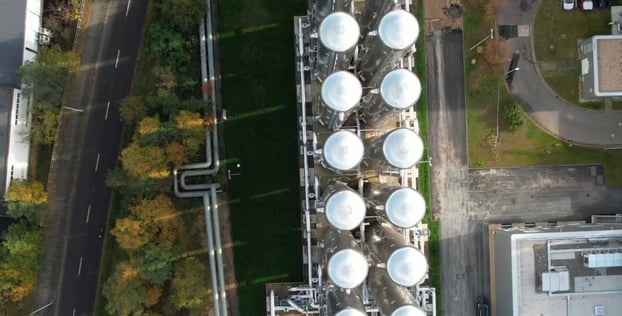
Published on July 10, 2026